
Egypt Weather for August 2027 Eclipse Viewing
Luxor’s August climate is exceptionally dry and usually clear. Understand cloud, heat, dust and local factors affecting the 2 August 2027 eclipse.
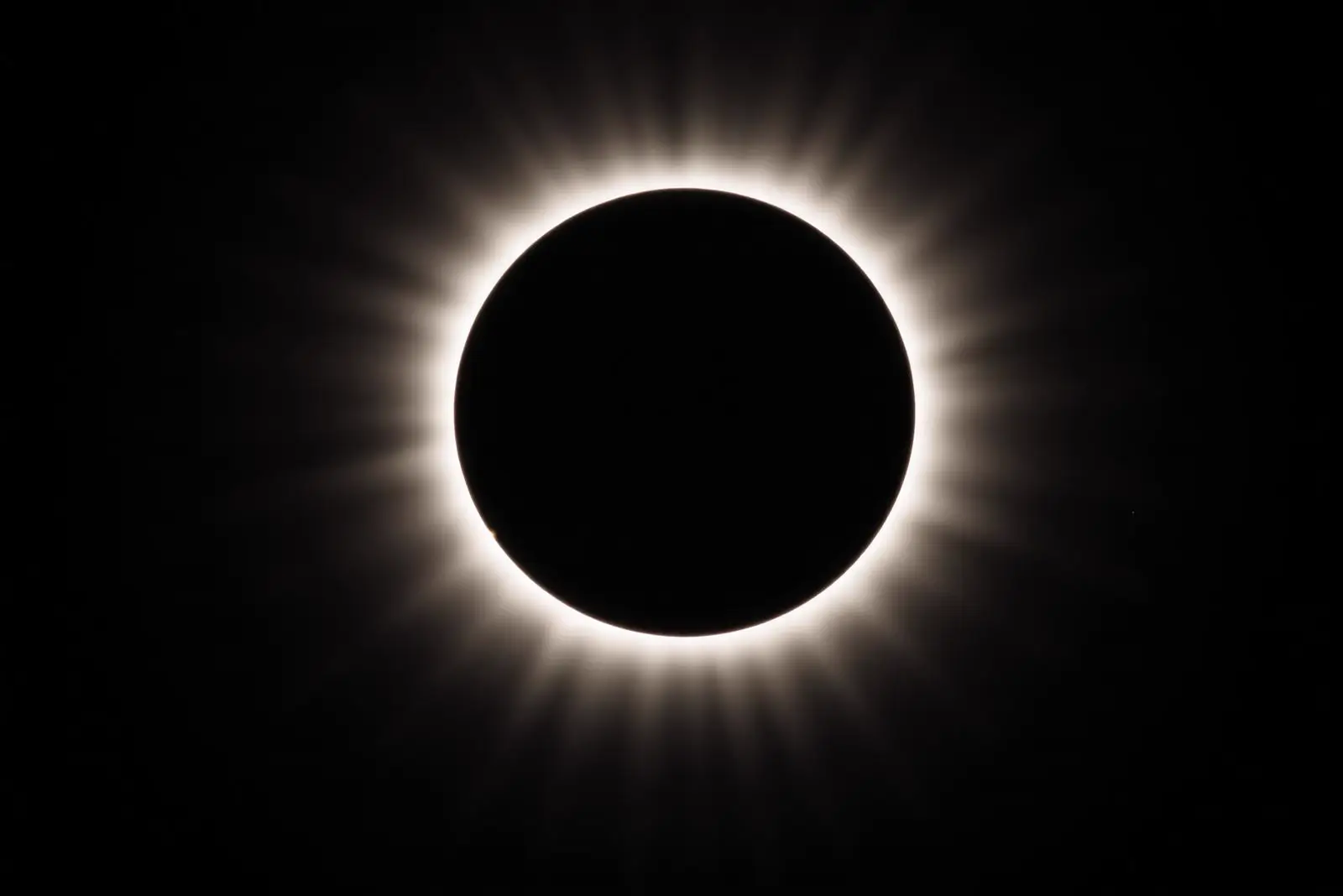
Anyone researching egypt weather august 2027 eclipse viewing conditions will find that Luxor has one of the world’s more favourable desert climates for astronomical observation. August is intensely hot, with very little rainfall and generally sparse cloud. That does not guarantee an unobstructed Sun on 2 August 2027, but it makes persistent weather systems less likely than at many eclipse destinations.
The total solar eclipse will pass over Luxor, where totality is expected to last about 6 minutes 23 seconds. This will be the longest total solar eclipse visible on land between 1991 and 2114. Weather planning therefore matters alongside the exact position of the viewing site, safe solar observation and heat management.
Egypt weather August 2027 eclipse viewing conditions
A precise forecast for 2 August 2027 will not be reliable until shortly before the event. Climate records can indicate what is usual, while operational forecasts and satellite imagery closer to eclipse day will identify the actual cloud and dust situation.
Luxor lies in Egypt’s hyper-arid Nile Valley. Rainfall is exceptionally rare in summer, and August days are normally dominated by strong sunshine. Typical daytime maximum temperatures are around the low 40s Celsius, while overnight readings often remain in the mid-20s. Conditions vary by year and location, so these figures should be treated as climatic guidance rather than a forecast.
The eclipse itself will cause a noticeable but temporary reduction in daylight and temperature. The extent of the cooling will depend on wind, ground conditions and the measurement site. It will not remove the need for shade, water and conservative heat precautions before and after totality.
How likely is cloud over Luxor?
Historical climate patterns suggest a high probability of clear or mainly clear skies in Upper Egypt during August. Several kinds of cloud can nevertheless affect viewing:
- Thin high cloud: Cirrus may allow the partial phases to remain visible while reducing contrast in the corona during totality.
- Local haze: Fine dust, moisture and urban pollution can soften the sky even when conventional cloud cover is negligible.
- Isolated middle-level cloud: Uncommon summer cloud can cross the Sun at an unfortunate moment without producing rain.
- Distant cloud banks: Cloud towards the horizon matters less when the Sun is high, although it may indicate changing atmospheric conditions.
Monthly averages cannot predict whether one small cloud will cover the Sun during a particular six-minute interval. They are most useful for comparing regions and understanding broad risk. For final decisions, hourly forecasts, visible satellite images and observations from staff on the ground are more relevant.
Forecast percentages also require care. A figure for cloud cover may describe the proportion of the whole sky covered, not the chance that the Sun itself will be obscured. High, translucent cloud and low, opaque cloud can receive similar numerical treatment despite having very different effects on eclipse photography.
Heat is the principal weather concern
For most travellers in Luxor, extreme heat is a more predictable issue than cloud. Eclipse viewing involves waiting outdoors, often on exposed ground, during late morning and around midday. Stone, sand and paved surfaces absorb and radiate heat, while tripods and metal equipment can become hot to touch.
Practical precautions include:
- drinking water regularly rather than waiting to feel thirsty;
- using shade before the partial phase and whenever observations permit;
- wearing loose, lightweight clothing, a broad-brimmed hat and high-factor sunscreen;
- limiting unnecessary walking and equipment carrying during the hottest hours;
- bringing any medication needed for heat-sensitive conditions and checking its storage requirements;
- following local staff instructions if anyone develops dizziness, nausea, confusion or a severe headache.
Travellers with cardiovascular, respiratory or heat-related medical concerns should seek advice from their clinician before departure. Air conditioning on a vessel or coach is useful for recovery, but the viewing period itself still requires preparation.
Dust, wind and atmospheric transparency
Rain is not the only weather variable that matters. Desert dust can reduce transparency and produce a pale sky around the Sun. It may also settle on lenses, telescopes and filters. Stronger winds can shake tripods or dislodge loosely secured solar viewers.
August is outside the main spring khamsin season, but dust events remain possible. Nile-side humidity may also create light haze, particularly near irrigated land, although the Sun’s elevation helps compared with observations near the horizon.
Equipment should be kept covered until required, and optical surfaces should be cleaned only with suitable tools. A weighted tripod, minimal sail area and secure cable arrangement will make a photographic setup more stable. Any solar filter fitted to a camera, binoculars or telescope must be firmly attached and remain in place throughout the partial phases.
Choosing a viewing site around Luxor
A good site needs more than favourable regional climate. Local obstructions, dust sources and logistics can determine the quality of the experience. Useful characteristics include:
- an unobstructed view of the Sun;
- enough space to separate tripods and seated observers;
- controlled access and safe transport;
- shade, drinking water and toilets nearby;
- distance from heavy traffic and active construction;
- an emergency plan for heat illness and equipment problems.
The Nile Valley is relatively narrow, with cultivated land beside the river and desert beyond it. These surfaces heat differently and may create local haze or air movement. Scouting should therefore consider both meteorology and access rather than simply selecting an open patch on a map.
Why a Nile itinerary suits eclipse planning
A cruise-based programme offers a practical structure for combining Upper Egypt’s archaeological sites with eclipse-day arrangements. The 9-Day Nile Eclipse Odyssey aboard MS Q, from $4,690, is built around the Luxor eclipse and provides nine days for the wider journey rather than treating totality as an isolated excursion.
Travellers seeking a different vessel category can consider the 9-Day Nile Eclipse Odyssey aboard MS TIA, from $6,990. Both itineraries place the eclipse within a managed programme, which is valuable when transport, midday heat and access to the observation area must be coordinated.
Luxor is not the only Egyptian destination within the eclipse path. The Siwa Oasis Eclipse Journey, from $4,990, combines an oasis setting with Cairo, Alexandria and El Alamein. Siwa is also arid, but its local horizon, dust, access and duration of totality differ from Luxor’s. Travellers should compare the complete journey rather than treating national-level weather statistics as identical across Egypt.
The full range of Egypt eclipse tours includes Nile cruises, dahabiyas, rail journeys and oasis programmes.
When forecasts become useful
Long-range outlooks issued months ahead cannot identify a cloud crossing Luxor at eclipse time. Around a week beforehand, broad pressure patterns and possible dust events may become clearer. Forecast confidence generally improves over the final two or three days, while same-day satellite imagery and local observations provide the most immediate evidence.
A sensible monitoring sequence is:
- use climate data now to assess the destination’s baseline suitability;
- check regional forecasts during the week before 2 August;
- compare more than one reputable forecast model;
- examine cloud by altitude rather than relying on a single total-cloud figure;
- review wind, visibility and airborne-dust guidance;
- follow the operator’s confirmed viewing and transport instructions.
Luxor’s exceptionally dry August climate gives eclipse observers a strong statistical starting point, not certainty. The sound approach is to combine that favourable climatology with heat precautions, secure viewing equipment and current meteorological information. For questions about observation arrangements on a specific departure, contact our Egypt eclipse team.