
Dahabiya vs Nile Cruise Ship for Eclipse Week
Compare cabin numbers, sailing style, mooring flexibility and prices before choosing a Nile cruise for Luxor’s 2027 total solar eclipse.
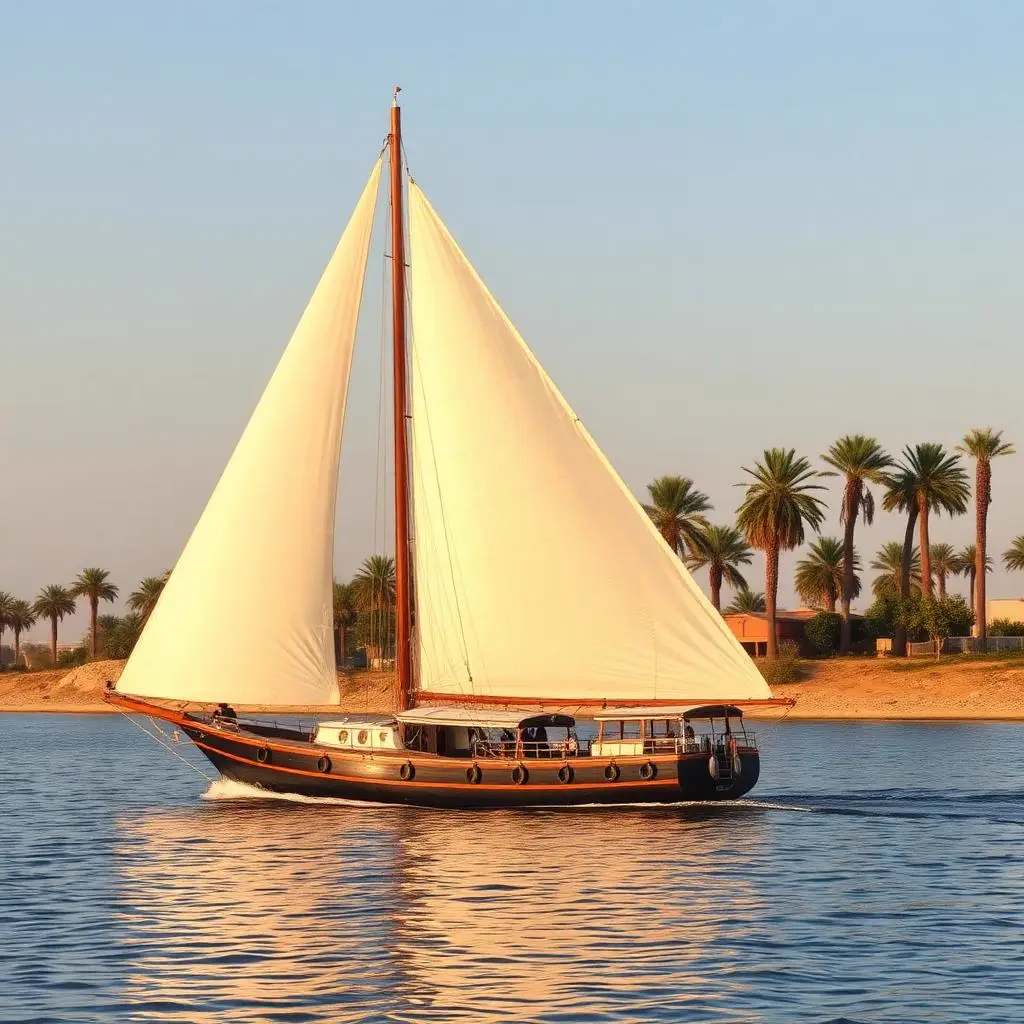
Choosing dahabiya vs Nile cruise ship: which is better for eclipse week comes down to more than vessel size. A dahabiya offers a small-scale, wind-assisted style of travel and greater choice over where it can moor. A conventional Nile cruise ship usually provides more cabins, broader hotel facilities and a lower starting price. For the total solar eclipse over Luxor on 2 August 2027, however, the itinerary, observation arrangements and operational planning matter at least as much as the boat.
Dahabiya vs Nile cruise ship: which is better for eclipse week?
A dahabiya is generally better for travellers who value quiet decks, a limited passenger complement and a more intimate experience on the river. A cruise ship is generally better for those who want more onboard amenities, a wider choice of cabin types and a more accessible starting price.
For eclipse week, neither vessel category is automatically superior. The eclipse itself requires a suitable observation location, safe transport, sensible timings and contingency planning. Luxor lies in the path of totality, with about 6 minutes 23 seconds of total eclipse expected on 2 August 2027. That is the longest total solar eclipse visible on land between 1991 and 2114, so demand around Luxor and the Nile will be exceptional.
The practical answer is therefore:
- Choose a dahabiya for privacy, unhurried sailing and flexible river stops.
- Choose a cruise ship for facilities, cabin choice and a lower published entry price.
- In either case, choose an itinerary specifically designed around the eclipse rather than assuming an ordinary Nile sailing will put you in the right place at the right time.
Cabin numbers and the onboard atmosphere
Cabin count is one of the clearest differences. Dahabiyas are small vessels, typically carrying far fewer guests than multi-deck Nile cruise ships. The result is a more domestic atmosphere: fewer people at meals, less movement through public areas and a stronger sense that the deck belongs to a small travelling party.
Cruise ships accommodate more passengers and operate more like floating hotels. Their scale can support larger lounges, restaurants and more varied cabin categories. It can also mean busier embarkation points, shared excursion departures and more competition for deck space.
Do not rely on the generic vessel type alone when comparing capacity. Ask for the confirmed cabin number and maximum passenger complement of the particular departure. Refits and different configurations can alter published figures. This is especially important during eclipse week, when single cabins, suites and rooms suitable for families may be scarce.
The Cleo Dahabiya · Nile Eclipse Expedition is a 10-day small-vessel option, starting from $8,739. Travellers preferring a ship can compare it with the 9-day Nile Eclipse Odyssey aboard MS Q, starting from $4,690, or the 9-day MS TIA Eclipse Odyssey, starting from $6,990.
Mooring flexibility and access to the river
A dahabiya's shallow draught and compact dimensions allow it to use smaller moorings and, where local permissions and river conditions allow, quieter riverbanks that large ships cannot reach. This can create peaceful evenings away from concentrations of cruise vessels. Small craft may also incorporate less-visited stops into their sailing programme.
A large cruise ship normally follows established channels, docks and operating patterns. That predictability has advantages: formal landing arrangements, established supplier networks and a timetable designed for substantial numbers of passengers. The trade-off is that several ships can share the same mooring, sometimes tied alongside one another.
Mooring flexibility should not be confused with eclipse-site flexibility. A dahabiya cannot simply stop anywhere near Luxor and treat its deck as a guaranteed observation platform. The Sun's position, shade, bank access, navigation rules, security arrangements and the vessel's planned movements all matter. A dedicated land-based observation site may provide clearer horizons and firmer operational control than a moving or moored boat.
Before booking, establish whether the eclipse will be viewed from land or from the vessel, how guests will reach the site and what time departure is planned. These details are more consequential than the romance of a particular sailing style.
Sailing style: canvas and current or floating hotel
Dahabiyas use sails when wind and navigation conditions permit, with auxiliary power or a support arrangement used when necessary. They travel at a gentler rhythm than conventional cruise ships. The open deck is usually central to the experience, serving as lounge, dining area and viewpoint over the Nile.
Cruise ships are powered vessels following scheduled routes between the principal Upper Egyptian ports. Their appeal lies less in traditional sailing and more in combining transport, accommodation, meals and hotel services. Air-conditioned interior spaces can be particularly valuable in August, when Upper Egypt is extremely hot.
That climatic point deserves weight. A shaded deck may be delightful early or late in the day, but reliable cabin air conditioning and comfortable indoor public rooms are important during the hottest hours. Ask how power and air conditioning operate on the individual dahabiya, including whether cooling remains available while moored. On a cruise ship, check whether any observation-related deck arrangements provide adequate shade and drinking water.
How the prices compare
The published itinerary prices show the broad difference, although they should not be treated as a vessel-only comparison because the tours vary in duration, ship and inclusions.
- Cleo Dahabiya · Nile Eclipse Expedition: 10 days, from $8,739.
- 9-Day Nile Eclipse Odyssey · MS Q: 9 days, from $4,690.
- 9-Day Nile Eclipse Odyssey · MS TIA: 9 days, from $6,990.
On these options, the dahabiya has the highest starting price. That reflects the economics of carrying fewer guests as well as the particular itinerary and service proposition. The two cruise-ship departures also occupy different price points, demonstrating that conventional ships are not one uniform category.
Compare the same elements before deciding: cabin category, single supplements, meals, guiding, monument admissions, transfers, domestic travel and eclipse-day arrangements. A lower starting figure may refer to a different room type or set of inclusions. Review the wider range of Egypt eclipse tours rather than comparing headline prices in isolation.
Which vessel suits each type of traveller?
Choose the dahabiya if
- You prefer a small travelling group and quieter shared spaces.
- The Nile journey itself is a central part of the holiday.
- You value flexible moorings and a slower programme.
- You are comfortable paying more for limited capacity.
- You favour an open-deck, traditional sailing atmosphere over extensive hotel facilities.
Choose a Nile cruise ship if
- You want a broader range of cabins and public rooms.
- Strong hotel infrastructure and indoor air-conditioned space are priorities.
- You prefer a lower starting price among the listed itineraries.
- You are comfortable travelling with more passengers.
- You value a structured schedule between major archaeological sites.
Travellers with reduced mobility should ask detailed questions whichever vessel they choose. Dahabiyas may have steep steps, narrow gangways and limited accessibility. Cruise ships may offer more space but can still involve stairs, uneven quays and walking through other vessels when ships are moored alongside.
What to verify before booking eclipse week
Availability will not be the only concern. Ask for precise answers on the following points:
- The eclipse observation location and expected unobstructed view.
- Transport timings between the vessel, hotel and observation site.
- Provision of certified eclipse-viewing glasses.
- Shade, seating, water and toilet arrangements at the site.
- The confirmed vessel, cabin category and maximum guest capacity.
- Air-conditioning arrangements while sailing and moored.
- The policy if river, security or operational conditions require itinerary changes.
For most travellers, the decision is ultimately about priorities. Cleo is the stronger fit when intimacy, deck life and small-vessel character justify the premium. MS Q offers the lowest starting price of the three referenced Nile itineraries, while MS TIA provides another ship-based option at a higher price point. For help matching cabin preferences, mobility requirements and budget to a departure, contact our Egypt travel team.