
Aswan to Luxor Itinerary: 9 Days on the Nile
Plan nine days from Aswan to Luxor, with a realistic sailing sequence, key temples and practical advice on choosing a dahabiya.
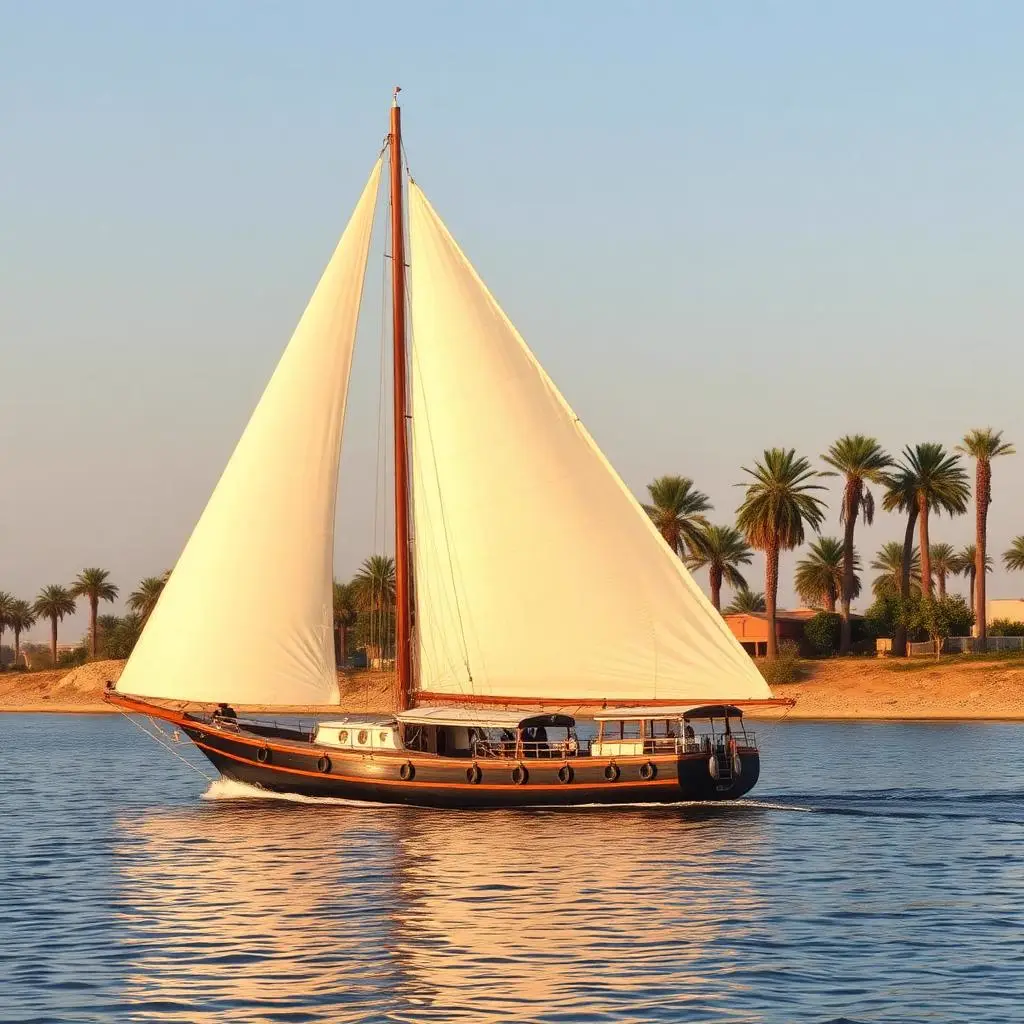
An aswan to luxor itinerary 9 days long gives the Nile sufficient room to set the pace. Rather than compressing Upper Egypt into a succession of coach transfers, you can explore Aswan, sail between riverside communities and archaeological sites, and finish with several of Egypt’s most important monuments in Luxor. The route works particularly well aboard a dahabiya, whose small scale and shallow draught permit quieter moorings than those generally used by large cruise ships.
Aswan to Luxor itinerary 9 days: a practical outline
The exact order of visits depends on sailing conditions, temple opening arrangements and the vessel’s moorings. A credible nine-day programme should therefore be treated as a well-planned sequence rather than a rigid timetable.
Day 1: Arrive in Aswan
Board your vessel in Aswan and settle into your cabin. Depending on arrival times, the first day may include an introductory walk or time to enjoy the Nile from the deck. It is sensible not to overload this day, particularly if guests are arriving after an international journey or a connection through Cairo.
Day 2: Philae and Aswan
Begin with Philae Temple, reached by motorboat on Agilkia Island. The sanctuary is principally associated with Isis and was dismantled and reconstructed during the UNESCO-led campaign that protected Nubian monuments from rising waters after the construction of the Aswan High Dam.
An Aswan day may also include the granite quarries and the Unfinished Obelisk, which reveals how ancient stoneworkers attempted to separate an enormous monument from the bedrock. Where offered, a visit to a Nubian village provides a different perspective on the region’s living culture, although the character and quality of such visits vary.
Day 3: Sail north from Aswan
Leaving the city marks a change in rhythm. Agricultural land, palms and villages occupy the narrow green margins between the river and desert. A dahabiya may stop at a riverside island or village that cannot accommodate a conventional cruise ship.
Sailing remains subject to wind and river conditions. Dahabiyas commonly carry auxiliary support to maintain the itinerary when the wind is unsuitable, so travellers should ask the operator how the vessel handles calm weather before booking.
Day 4: Kom Ombo
Visit Kom Ombo, an unusual double temple with parallel spaces dedicated to Sobek, the crocodile god, and Haroeris, a form of Horus. Reliefs cover religious ritual, royal imagery and medical instruments. The nearby crocodile museum helps explain Sobek’s local cult through preserved mummified crocodiles and associated objects.
Continue downstream after the visit, with the possibility of a rural mooring away from the main cruise-ship berths.
Day 5: Gebel el-Silsila and riverside Egypt
A slower itinerary may include Gebel el-Silsila, an extensive sandstone quarry area between Kom Ombo and Edfu. Stone extracted here was used in major temples, and the site contains quarry inscriptions, shrines and rock-cut chapels.
This is also a useful day for observing the contemporary Nile Valley rather than treating the river merely as transport between temples. Smaller-vessel programmes may incorporate a guided village walk, an island stop or lunch ashore, subject to local arrangements.
Day 6: Edfu Temple
Edfu contains one of Egypt’s best-preserved ancient temples. Dedicated to Horus, the surviving Ptolemaic complex retains monumental pylons, courtyards, reliefs and a sanctuary. Its inscriptions are particularly valuable for understanding temple ritual and the mythic conflict between Horus and Seth.
Edfu is deservedly popular, so an early visit can make the scale and detail easier to appreciate. Continue towards Esna after returning to the vessel.
Day 7: Esna and the approach to Luxor
At Esna, the principal ancient monument is the Temple of Khnum. Its surviving hypostyle hall stands below the level of the modern town, with columns and inscriptions whose colours have become clearer through conservation work.
The passage through Esna Lock can affect sailing times. Delays are possible, and a thoughtful itinerary builds in flexibility rather than promising exact arrival hours. Continue towards Luxor once navigation permits.
Day 8: Luxor’s East Bank
Explore Karnak, a vast religious complex developed by successive rulers over many centuries. The Precinct of Amun-Re includes the Great Hypostyle Hall, monumental gateways, obelisks and sacred spaces. A knowledgeable Egyptologist is valuable here because Karnak’s building phases can otherwise be difficult to interpret.
Luxor Temple offers a more compact counterpart in the centre of the modern city. It was connected ceremonially with Karnak by the Avenue of Sphinxes and was associated with the Opet festival. An evening visit, where scheduling allows, presents the reliefs and colonnades in cooler conditions.
Day 9: West Bank and departure
Cross to Luxor’s West Bank for the royal and funerary landscape. Most first visits concentrate on:
- The Valley of the Kings, where individual tomb access varies by ticket and conservation closures
- The terraced mortuary temple of Hatshepsut at Deir el-Bahari
- The Colossi of Memnon, which once guarded the entrance to Amenhotep III’s mortuary temple
Allow adequate time between disembarkation, sightseeing and onward flights or trains. A programme that attempts a full West Bank tour immediately before an early departure is rarely comfortable.
Why a dahabiya suits this route
Nine days are particularly well suited to a dahabiya because the additional time allows the journey itself to remain part of the experience. The advantages usually include:
- Fewer passengers and a quieter atmosphere on board
- Access to smaller or more secluded moorings
- More time on deck at the river’s pace
- Opportunities for village, island and lesser-visited archaeological stops
- A more flexible programme than a short, high-capacity cruise
The principal trade-off is variability. Wind, lock traffic and local permissions can influence the daily plan. Travellers who need a fixed schedule should examine the operating notes carefully.
For a route matching the search direction, the 9-Day El Hanem Dahabiya · Aswan to Luxor is the most directly relevant option, starting from $8,997. It is designed around nine days of northbound Nile travel rather than a hurried transfer between the two cities.
Comparing northbound and southbound itineraries
The same major Nile corridor can be travelled from Luxor to Aswan. Direction does not substantially alter the archaeological importance of the sites, but it does change the narrative of the journey. Northbound travel builds towards Luxor’s dense concentration of temples and royal tombs; southbound travel moves from monumental Luxor towards Aswan’s granite landscape and Nubian character.
Travellers whose dates or flight plans favour the reverse direction can consider the 9-Day Cleo Dahabiya · Luxor to Aswan Classic, from $7,997. It provides a useful alternative while retaining the nine-day dahabiya format. You can also compare the wider collection of Egypt tours and Nile journeys.
What to check before booking
Ask for clarity on what is included rather than relying only on the route map. Important questions include:
- Which temple entrances and tomb tickets are covered
- Whether Abu Simbel is included, optional or omitted
- The number of hotel nights versus nights aboard
- How the vessel operates when there is insufficient wind
- Whether airport or railway transfers are included
- The expected group size and guiding arrangements
- Mobility requirements for gangplanks, uneven ground and temple steps
Abu Simbel is south of Aswan and requires a separate road or air excursion; it is not naturally on the sailing route to Luxor. Adding it without extending the holiday can make the Aswan portion rushed.
For tailored advice on route direction, cabin availability and connections, contact Middle East Travel Alliance. A well-balanced nine-day itinerary should protect time for Aswan and Luxor while preserving the unhurried river journey that makes a dahabiya distinctive.